Inside the Race to Build Smaller, Cheaper Data Centres
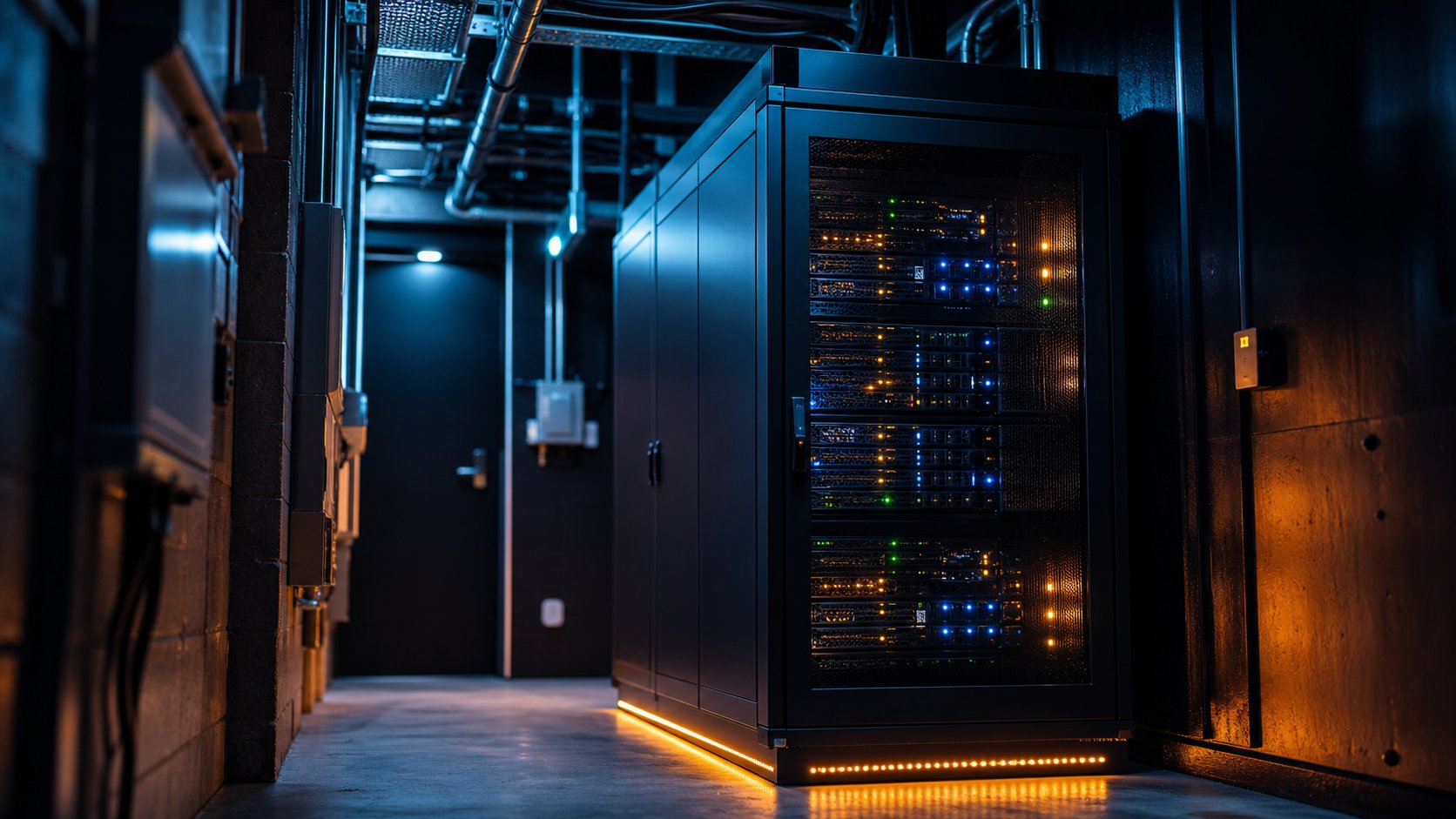
Every few years the industry rediscovers the idea that computing should happen closer to the people using it. What makes 2026 different is not the pitch but the arithmetic: power is constrained, long-haul bandwidth is expensive, and AI inference has created a workload that is happy to run in a cabinet down the road rather than a hyperscale campus two time zones away. Here is what the shift to smaller data centres actually changes for the organisations that buy computing, rather than the ones that build it.
What counts as an “edge” data centre
The term stretches across three very different things. The smallest is a single hardened cabinet — a few kilowatts of compute with its own cooling and battery — dropped into a retail back room, a factory, or a hospital basement. The middle tier is a purpose-built shed of 500kW to a few megawatts on the edge of a city, often on land nobody wanted for anything else. The largest is a regional facility that only looks small next to a hyperscale campus.
The distinction matters when you buy. A cabinet is a device you are responsible for; a regional facility is a service somebody else operates. The middle tier is where most of the 2026 growth is, and it is also where contract terms vary the most. Ask which layer a provider actually means before comparing prices, because the phrase “edge” on a quote can describe a fridge-sized box or a building.
Why the economics changed
Three pressures pushed capacity outward. Power availability is the first: grid connections near established data centre clusters in Northern Virginia, west London, and parts of Sydney now come with multi-year waiting lists, so developers go where spare capacity exists. The second is bandwidth. Moving video, telemetry, and model inputs to a distant region and back costs money on every hop, and egress fees are one of the few cloud line items that rarely fall.
The third is the workload itself. Training enormous models still wants a giant, tightly coupled cluster. Running them does not. A quantised model served from a rack near the user can answer in tens of milliseconds and never send the raw input across a border. Once inference became the dominant share of AI compute, the case for distributing it stopped being theoretical.
A practical test: if a workload is chatty, latency-sensitive, or produces more data than it consumes, it is a candidate for the edge. If it is a monthly batch job, it almost certainly belongs wherever compute is cheapest.
What smaller sites do well
Latency is the obvious win, and it is not only about user experience. Machine vision on a production line, point-of-sale fraud checks, and interactive tools all degrade in ways that are hard to design around once round-trip time passes roughly 50 milliseconds. Keeping that loop local removes an entire class of intermittent problems that are miserable to debug from a dashboard.
Data residency is the quieter advantage. A site in the same country as the customer simplifies conversations about where records are processed, which is increasingly the first question a public sector or healthcare buyer asks. Small sites also fail small: an outage takes down one location rather than a region, provided the application was designed so that locations do not depend on each other.
What they do badly
Unit costs are higher. A cabinet in a shopping centre will never match the power purchase agreements, staffing ratios, or hardware discounts of a hyperscale campus. Providers close some of that gap with standardised prefabricated builds, but if your workload is not latency-sensitive you are paying a premium for proximity you do not need.
Operations get harder before they get easier. Fifty small sites mean fifty sets of spares, fifty firmware baselines, fifty physical access policies, and a maintenance schedule that no longer fits in one person's head. Organisations that succeed at this treat the estate as software: one image, automated configuration, remote management that works when the primary link is down, and a hard rule that no site is ever hand-tuned.
How to evaluate a provider
- Power and cooling honesty. Ask for the contracted kW per rack, not the theoretical maximum, and what happens if you exceed it.
- Connectivity diversity. Two carriers entering the building through two physical paths, or one carrier twice? They are not the same thing.
- Remote hands. Response times in hours, who is on call overnight, and what a callout costs outside business hours.
- Exit terms. How quickly you can remove hardware and data, and whether early termination triggers a fee that erases the savings.
- Reporting. Monthly power use, incident history, and maintenance windows you can plan around.
Then run a narrow trial. Move one workload with a clear success metric — a checkout service, a camera pipeline, a caching layer — and measure latency, cost, and support responsiveness for a full quarter including at least one maintenance event. A trial that never experiences a bad day has not told you much.
Regional notes
United States
Capacity is expanding fastest in secondary markets where power and land are available, and incentives vary sharply by state. Confirm the grid interconnection status of any new build you plan to depend on, and read the fine print on power cost pass-through clauses, which have become common in contracts signed since 2024.
Canada
Cool climates and hydroelectric supply make several provinces attractive, but distances between population centres mean “national coverage” can still leave a site far from your users. Check whether the provider operates its own facility or resells space, and confirm where support staff are physically located.
United Kingdom
Grid connection queues around London have pushed development to the Midlands, the North West, and Scotland. For public sector and regulated workloads, ask for documented data location and subprocessor lists rather than a marketing claim about UK hosting.
Australia
Distance is the defining constraint. Latency between the east coast and Perth is unavoidable physics, which makes local presence genuinely valuable for interactive workloads. Weather resilience, bushfire and flood planning, and realistic parts logistics for remote sites deserve as much attention as the price per rack.
A sensible position for most organisations
Very few buyers need to choose a side. The durable pattern in 2026 is a small, well-understood footprint close to users for the handful of things that genuinely benefit, with the bulk of storage, batch processing, and training left wherever it is cheapest and best managed. Keep the interface between the two layers simple and documented, because that boundary is where the outages happen.
Whatever mix you land on, write down why. Record the latency target, the data residency requirement, and the cost assumption behind each placement decision. Those three numbers make the next review a ten-minute conversation instead of an argument, and they will tell you quickly when the economics shift again — which, on current form, they will.
Questions readers ask
What is an edge data centre?
It is a small computing facility placed close to the people or machines it serves — anything from a single hardened cabinet in a building to a purpose-built site of a few megawatts on the edge of a city. The goal is lower latency and local data handling rather than raw scale.
Is edge computing cheaper than the cloud?
Usually not per unit of compute. Small sites lack the buying power and staffing efficiency of hyperscale facilities. The savings come indirectly, through reduced data transfer fees, fewer latency-related failures, and simpler data residency, so the comparison only makes sense per workload.
Which workloads belong at the edge?
Anything chatty, latency-sensitive, or data-heavy at the source: machine vision, point-of-sale and fraud checks, industrial control, real-time analytics, and AI inference. Batch jobs, archives, and model training generally belong wherever capacity is cheapest.
What is the biggest risk of a distributed estate?
Operational drift. Managing many small sites by hand produces inconsistent firmware, undocumented fixes, and spares nobody can find. Treat every site as an identical, automatically configured unit, and test remote management while the primary connection is down.
The bottom line
Smaller data centres are not a replacement for the cloud; they are a way to put a specific set of workloads where physics and regulation want them. Decide placement workload by workload, insist on honest power, connectivity, and exit terms, and automate the estate from day one. Do that and the edge becomes a quiet infrastructure decision rather than a project that needs constant defending.
This article provides general information, not legal, financial, security, or professional advice. Product terms, availability, privacy practices, and local requirements can change. Check the current information from the relevant provider and seek qualified local advice for high-impact decisions. IntelGuard may earn a commission from future affiliate links, at no additional cost to readers. Read our affiliate disclosure.