Smart rings in 2026: what they track, what they cost, and whether they are worth it
The smart ring has settled into a clear role: it is the device you forget you are wearing, which is exactly why it gets worn to bed. That single fact explains the category’s rise. Sleep and recovery tracking only works if the sensor stays on your finger for eight hours, and a ring manages that far more comfortably than a watch. The trade is that you give up a screen, GPS, and most of the interactivity. Whether that trade is right depends on what you actually want to measure — and on a subscription question that many buyers discover too late.
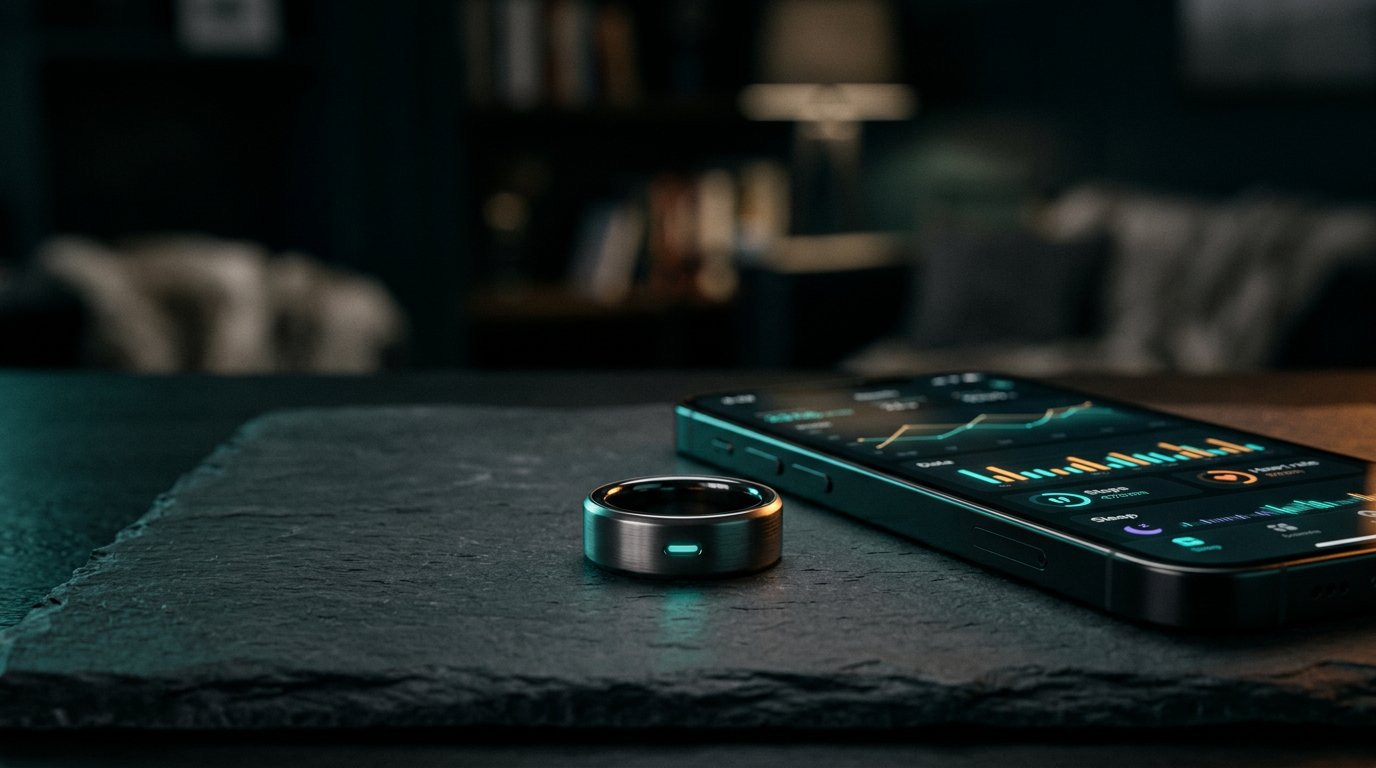
What a ring measures well
Rings are strongest at slow, continuous signals: resting heart rate, heart-rate variability, skin temperature trends, blood-oxygen estimates overnight, movement during sleep, and time spent asleep versus awake. Because they sit against a well-perfused finger, the optical sensors often get a cleaner signal overnight than a watch strap that loosens as you move.
The useful output is not any single night’s score. It is the baseline. After two or three weeks, a ring can show you that your resting heart rate has drifted up, that your sleep has shortened, or that your temperature is running slightly warm — patterns that are hard to notice subjectively and easy to see on a chart.
What it does not do
A ring has no screen, so it cannot show your pace mid-run. Most models lack built-in GPS, so distance comes from your phone. Rapid heart-rate changes during intervals are tracked less reliably than with a chest strap or a good watch. And because the form factor is small, the battery has to be small too, which shapes the charging routine.
If your goal is training performance, a watch or a chest strap is the better tool. If your goal is sleep, recovery, and a long-term view of how your body is responding to life, the ring’s limitations matter much less.
Sizing and comfort decide more than specs
The best sensor in the world is useless if the ring is uncomfortable or loose. A ring should sit snugly enough that it does not rotate freely, but not so tight that it leaves a mark or feels cold and numb in the morning. Fingers change size with temperature, hydration, and time of day, and the difference between a size that works and one that does not is often half a size.
Use the manufacturer’s sizing kit if one is offered, and wear the sample for a full day and night rather than a few minutes. If you are between sizes, consider which finger you will actually use — the index finger usually gives the best signal, but many people find a middle or ring finger more comfortable for round-the-clock wear.
Battery life and charging habits
Typical rings run several days between charges, with battery life falling when tracking is continuous. The practical question is not the headline number but how the charge fits your routine. A ring that needs an hour on the charger every four days is easy to live with if you charge it while showering; one that needs two hours every other day will end up in a drawer.
Charging habits also affect data continuity. A gap overnight is a missing night in your trends, and the first month is when the baseline matters most. Charge at a consistent time, keep the charger where you will see it, and check the app after a charge to confirm the sync completed.
The subscription question
This is where smart rings differ most from watches. Several popular models bundle meaningful features — detailed insights, historical trends, guided programmes — behind a monthly subscription, with only basic metrics available for free. Add three years of that fee to the purchase price and the real cost of the ring can double.
Before buying, ask what the app shows after the trial ends: raw numbers, or nothing but a prompt to subscribe? Also ask whether you can export your data, and what happens to your history if you cancel. A wearable that locks your own health data behind a recurring payment is a rental, not a purchase.
Data, privacy, and export
Health data is among the most sensitive categories you can generate, and a ring collects it continuously, including overnight. Read the privacy policy for two things in particular: whether your data is shared with third parties or used for insurance, advertising, or research purposes, and whether the app offers a genuine export and delete option.
Check where the data is stored and who can access it, and treat the answers as part of the product’s value. If you would not be comfortable explaining the arrangement to a family member, that is useful information before you have months of history invested.
Who should skip the ring
Skip it if you want workout feedback in real time, if you already wear a watch you are happy with and only need sleep data occasionally, if a monthly fee for your own health history is unacceptable, or if you know you will not keep it charged. Also skip it if you are looking for a medical device: rings are wellness trackers, and several now carry clear warnings that they are not intended to diagnose anything.
The strongest case for a ring is specific: you want overnight and all-day baseline tracking, you dislike sleeping in a watch, and you will actually use a trend line rather than a score. For that person, a ring is the most comfortable way to get the data. For everyone else, a modest watch or no tracker at all remains a perfectly good answer.
Regional notes for the US, Canada, UK, and Australia
In the United States, health data handling varies by state and by whether the app is covered by health privacy rules. Check the policy for data-sharing clauses and whether you can request deletion.
In Canada, federal and provincial privacy laws give you the right to access and correct personal information held by a company. Ask how to exercise that right before you subscribe.
In the United Kingdom, health data attracts stronger protections under data protection law, and you can request a copy of your data from the provider. Confirm the export option works before you build a long history.
In Australia, the privacy regulator has taken an increasing interest in health and fitness apps, and consumer law gives you remedies if a product does not do what was promised. Keep the receipt and the subscription terms.
A smart-ring buying checklist
- Decide which question you want answered: sleep and recovery, or workout performance.
- Use the sizing kit for a full day and night, not a few minutes in a shop.
- Calculate the three-year cost including any subscription before deciding.
- Confirm what the app shows after the free trial ends.
- Check that export and delete options exist, and test them.
- Read the privacy policy for third-party sharing and research use.
- Plan a charging routine that keeps the overnight data continuous.
The bottom line
A smart ring is the best wearable for one job: tracking sleep and recovery without asking you to sleep in a watch. It is the wrong purchase for real-time workout feedback, and a questionable one if the features you want sit behind a subscription that never ends. Buy it for the trend line, check the privacy terms as carefully as the hardware, and it earns its place on your finger.
Questions readers ask
Do smart rings work without a subscription?
Some do, some do not. Several popular rings include basic tracking for free but place detailed insights, scores, and history behind a monthly plan. Check what remains visible after the trial ends before you buy, because the subscription can exceed the price of the ring over three years.
How accurate are smart rings compared with a watch?
For sleep and resting heart rate, rings are competitive and often more comfortable to wear overnight. For workouts with GPS, rapid heart-rate changes, and screen-based feedback, a watch is still the better tool. Many people use both and let the ring handle sleep.
Is smart ring health data private?
It is sensitive data, so treat it that way. Review whether the app sells or shares data, whether it offers export and deletion, and where the data is stored. Health information can affect insurance and employment decisions, so read the privacy policy before you generate months of records.
This article provides general information, not legal, financial, security, or professional advice. Product terms, availability, privacy practices, and local requirements can change. Check the current information from the relevant provider and seek qualified local advice for high-impact decisions. IntelGuard may earn a commission from future affiliate links, at no additional cost to readers. Read our affiliate disclosure.