Wearables Are Starting to Talk to Each Other Properly
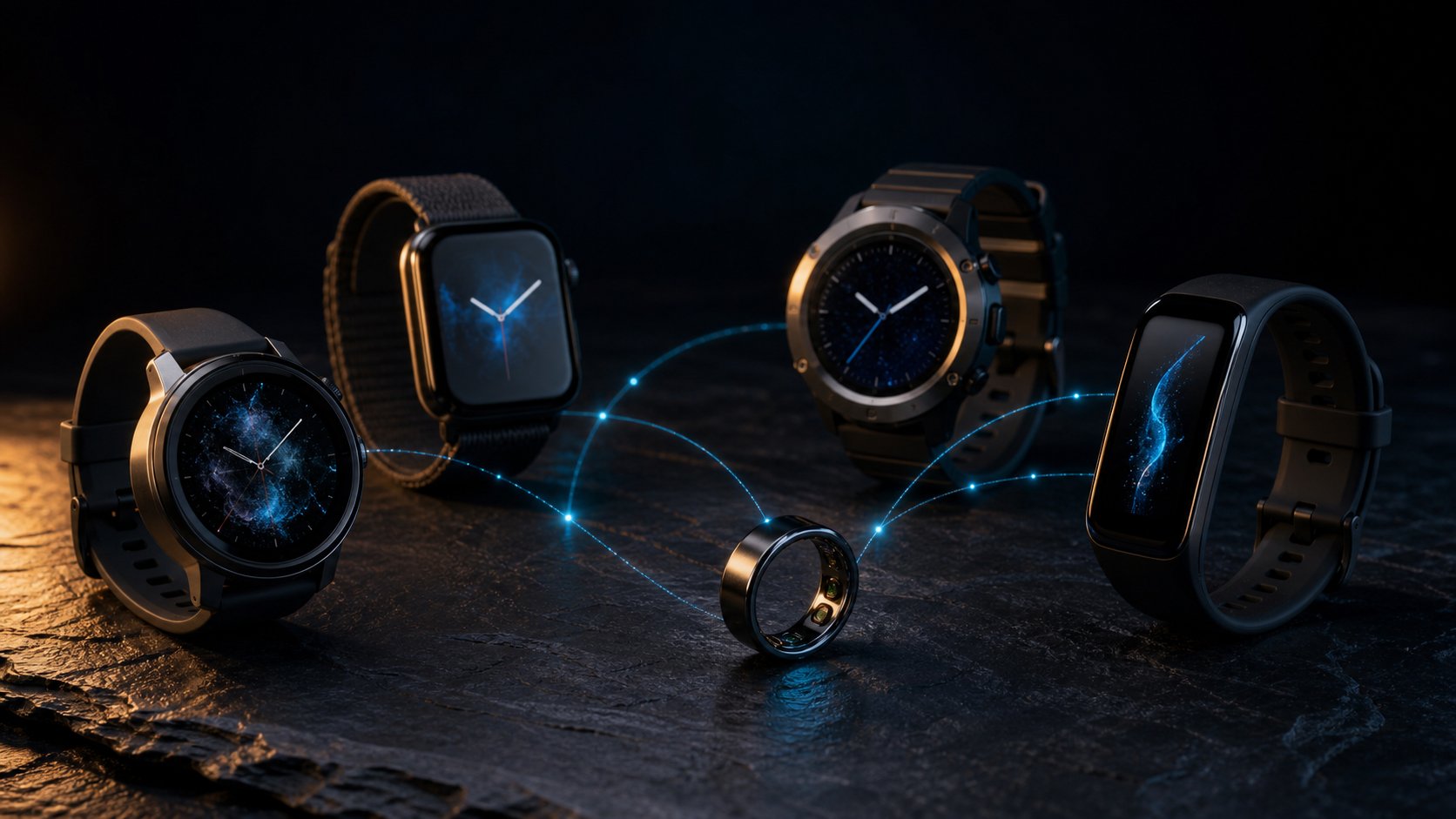
For a decade, wearables were excellent at collecting data and terrible at sharing it. Your watch knew your heart rate, your ring knew your sleep, your scale knew your weight, and none of them agreed on anything. That is finally changing — not because manufacturers became generous, but because health systems, employers, and regulators started asking for exports in formats that standard software can read. Here is where interoperability genuinely works in 2026, and where it is still a marketing claim.
What changed under the surface
The practical shift is the spread of standard health data formats. Where an app once exported a proprietary CSV, more platforms now emit records that map onto recognised clinical structures, with consistent units, time zones, and measurement context. That sounds dull, but it is the difference between a clinician being able to read your last 90 days of resting heart rate and a support agent telling you to take a screenshot.
The second change is device-level. Bluetooth profiles for heart rate, cycling power, and blood pressure have been stable for years, and more manufacturers now implement them properly instead of forcing everything through their own app. A chest strap that pairs simultaneously with a watch and a bike computer is no longer a niche trick, and third-party sensors increasingly show up as first-class citizens in mainstream apps.
What works reliably today
- Live workout sensors. Standard Bluetooth heart rate, cadence, and power broadcasts work across almost all brands.
- Aggregator apps. A well-chosen hub app can pull steps, sleep, and workouts from several ecosystems and present one timeline.
- Bulk export. Most major platforms now offer a complete data download, often required by privacy law rather than goodwill.
- Clinical sharing. A growing number of health providers accept structured uploads for blood pressure and glucose readings.
That combination covers the everyday cases: training with mixed equipment, moving to a new phone, or showing a doctor three months of readings. It is genuinely better than 2022, when most of this required a spreadsheet and patience.
What still breaks
Derived metrics remain proprietary and non-comparable. Readiness, recovery, stress, sleep stages, and body battery scores are each computed differently, and exporting them tells the receiving app nothing useful. If you switch brands, expect the scores to reset and the trend line to be meaningless across the boundary. Only raw-ish measurements — heart rate, heart rate variability, steps, distance, weight, oxygen saturation, temperature deviation — travel well.
Sync direction is the other common trap. Many integrations are read-only in one direction: your watch can push a workout into a fitness app, but the fitness app cannot push a plan back to the watch. Check the arrow before building a routine around it. And when two apps both write to a shared health store, duplicate workouts and double-counted calories are still routine annoyances that require manual deduplication settings.
Before buying a second device from a different brand, spend ten minutes confirming three things: does it export raw data, does it broadcast standard Bluetooth sensor profiles, and does it work with at least one aggregator you already use?
Owning your health record
Health data is the most sensitive category most people generate casually. Treat the export function as a core feature rather than an escape hatch. Download a full copy at least twice a year, store it somewhere you control, and keep it out of general cloud folders that are shared with family or colleagues by default.
Read the sharing settings rather than the privacy summary. The questions that matter are narrow: who can see the data by default, whether research or product improvement sharing is opt-in or opt-out, whether an insurer or employer programme receives anything, and what happens to the record if you close the account. A platform that answers these plainly in its settings screen is usually the better long-term custodian regardless of which sensor is marginally more accurate.
Buying advice that survives the next launch
Pick the ecosystem first and the device second. The watch you buy in 2026 will be replaced; the account holding six years of history will not. Favour the platform with honest exports, a track record of supporting older devices, and a subscription policy you can live with — particularly for rings and straps where core features increasingly sit behind a monthly fee.
Then be deliberately boring about the sensors. Optical heart rate is good at rest and during steady effort, and less reliable during intervals or in cold conditions. Sleep staging is an estimate. Blood pressure and glucose features vary enormously in regulatory status between countries. Buy for the two or three measurements you will actually act on, and treat everything else as interesting background.
Regional notes
United States
Features often launch here first, but health data protections depend heavily on context: records held by a consumer app are usually not covered by the same rules as records held by a healthcare provider. If a device is part of an employer or insurer wellness programme, read the participation terms carefully before enrolling.
Canada
Availability of clinical-grade features can lag, and some are disabled pending local approval. Provincial health systems differ in what they accept from consumer devices, so check with your own provider before assuming an upload will be useful at an appointment.
United Kingdom
Data protection rules give you a strong right to a copy of your data in a usable format, which is worth exercising. NHS-linked apps and consumer platforms are increasingly able to exchange structured records, but coverage varies by trust and region rather than being uniform nationally.
Australia
Regulatory approval for health-adjacent features arrives on its own timetable, so a function advertised overseas may be absent locally. Check warranty and repair coverage too: for smaller brands, a replacement can involve shipping abroad, which is a real cost for a device you wear daily.
Questions readers ask
Can I use a smartwatch from one brand with an app from another?
For live sensor data and completed workouts, usually yes — standard Bluetooth profiles and aggregator apps handle this well. Proprietary scores such as readiness or recovery generally do not transfer in any meaningful form.
Which wearable data actually transfers between platforms?
Measured values travel best: heart rate, heart rate variability, steps, distance, weight, oxygen saturation, and temperature deviation. Computed scores are brand-specific and should be treated as tied to the device that produced them.
How do I avoid losing years of history when I switch brands?
Export a full copy of your data before you cancel anything, keep it in storage you control, and check that the new platform can import at least the measurements you care about. Do the export while the old account is still active.
Is wearable health data private?
It depends on who holds it. Data with a healthcare provider is usually covered by medical privacy rules; the same reading inside a consumer app often is not. Check default sharing, research opt-ins, and any employer or insurer programme terms before enrolling.
The bottom line
Wearable interoperability in 2026 is real but partial: measurements move, scores do not. Choose the ecosystem you are willing to keep, export your history regularly, verify that a new device speaks standard sensor profiles before you buy it, and judge platforms by how plainly they explain sharing rather than by the length of their feature list.
This article provides general information, not legal, financial, security, or professional advice. Product terms, availability, privacy practices, and local requirements can change. Check the current information from the relevant provider and seek qualified local advice for high-impact decisions. IntelGuard may earn a commission from future affiliate links, at no additional cost to readers. Read our affiliate disclosure.